
In a linear industrial economy, equipment reached the end of its projected lifecycle and was promptly replaced. However, as UK manufacturers face a range of pressures – rising material costs, stringent ESG (Environmental, Social, and Governance) targets, and the need for rapid scalability – the “Circular Economy” is no longer just a buzzword; it is a strategic imperative.
At Asmech Systems Ltd, we’ve spent over 25 years helping manufacturers optimise their lines. Increasingly, the question isn’t just “What’s the latest technology?” but “How can we make our current assets work harder for longer?”
This brings us to the concept of second-life equipment. But when does refurbishing or repurposing make sense, and when is it a false economy?
Why Now?
The modern production manager is often caught between two fires:
- Capital Expenditure (CAPEX) Constraints: High-interest rates and economic volatility make massive investments in brand-new turnkey systems a daunting prospect.
- Sustainability Targets: With the UK’s drive toward Net Zero, discarding tonnes of stainless steel that could be upgraded is becoming harder to justify to stakeholders and shareholders alike.
Repurposing or refurbishing equipment (often referred to as “re-manufacturing”) is a cornerstone of the circular economy. It makes sense under the following conditions:
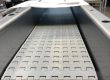
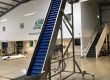
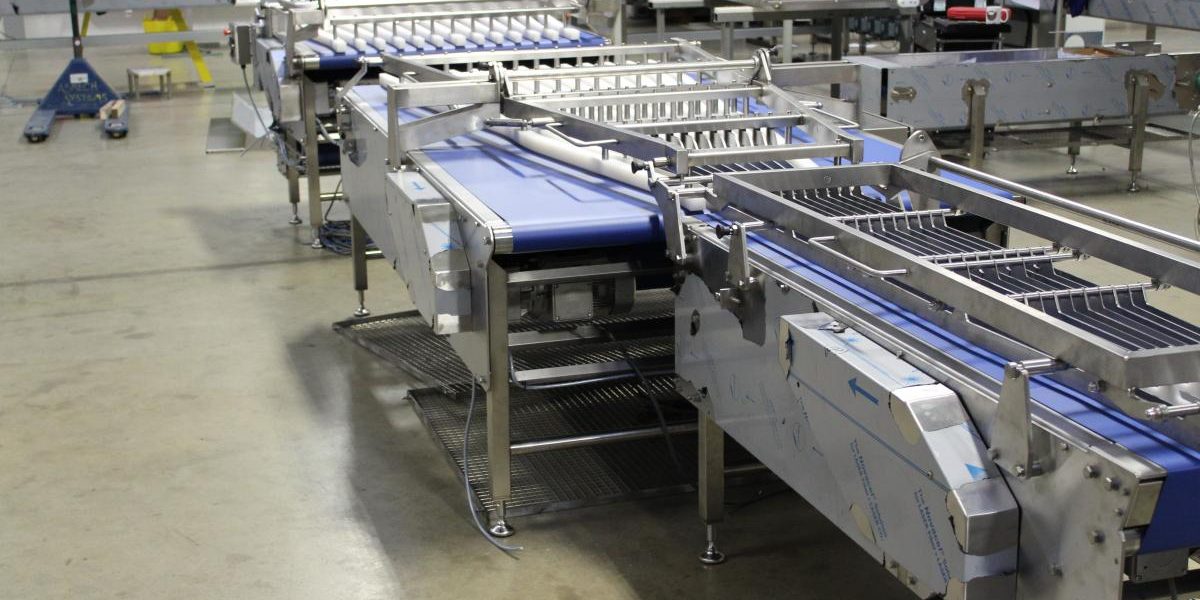
- Structural Integrity is High: Conveyor frames and heavy-duty supports are built to last. If the “bones” of the system, often high-grade 304 or 316 stainless steel, are sound – replacing the entire unit is often unnecessary.
- Technological Modular Upgrades: Often, it isn’t the mechanical frame that is “old,” but the automation. Integrating new AI-powered sensors or PLC (Programmable Logic Controller) upgrades onto an existing line can provide a future level of efficiency at a fraction of the cost of a new build.
- Lead Time Pressures: Global supply chains can still be unpredictable. Refurbishing an existing system on-site or in a UK-based facility often has a significantly shorter lead time than waiting for a new overseas shipment.
The “False Economy” Trap
While we advocate for sustainability, there is a “tipping point” ,where second-life equipment becomes a liability:
- Hygiene Standards: In the pharmaceutical and dairy sectors, hygiene is non-negotiable. If an older system has “dead legs” or pits in the material that could harbour bacteria, a new, bespoke hygienic design is the only safe path forward.
- Energy Inefficiency: Older motors and drives can be “energy vampires.” If the cost of running an old system outweighs the CAPEX of a new, energy-efficient solution, the circular choice is actually to recycle the materials and start fresh.
- Safety Compliance: UK safety regulations are rigorous. If an old system cannot be economically brought up to current PUWER (Provision and Use of Work Equipment Regulations) standards, it’s time to retire it.
At Asmech Systems Ltd, we don’t just sell machines; we provide handling solutions. Because we are a fully integrated company, handling everything from initial concept and design to manufacture and installation, we are uniquely positioned to audit your current line.
Our engineers can determine if a “second-life” refurbishment will provide the ROI you need, or if a bespoke, new-build system is required to meet your throughput targets for 2026 and beyond.
The circular economy in manufacturing is about making smarter, more data-driven decisions. By evaluating the lifecycle of your equipment, you can reduce waste, hit sustainability targets, and protect your bottom line.
Ready to audit your production line? Whether you’re looking to breathe new life into an existing system or require a bespoke turnkey solution designed from the ground up, our team is here to help.
Contact Asmech Systems Ltd today on 01623 424 442 or email sales@asmechsystems.co.uk for a no-obligation chat about your requirements.