

As UK manufacturers head into the fourth quarter, energy management shifts back to the top of the agenda. While seasonal production ramps up to meet peak demand, winter energy tariffs inevitably put pressure on operational margins.
For many facilities across the UK, heating and heavy processing machinery receive the most attention during energy audits. However, automated handling systems running continuously across multiple shifts, represent a significant, constant draw on grid power. Optimising the electrical and mechanical efficiency of your conveyor lines offers a practical, immediate route to lowering overall kilowatt-hour (kWh) consumption without compromising throughput.
The Unseen Electrical Drain on Industrial Lines
In a busy factory, conveyor belts frequently run at full speed while carrying no product at all. Traditional fixed-speed systems operate on a binary basis: turned on at the start of a shift and left running until the end.
This continuous operation creates two distinct forms of energy waste:
- Direct Power Waste: Running motors under full voltage during idle periods consumes electricity unnecessarily.
- Mechanical Drag: Inefficient motor gearboxes, misaligned rollers, and friction between the belt and bed force the drives to draw extra current simply to overcome internal resistance.
Addressing both electrical controls and physical mechanics significantly reduces the baseline energy required to keep goods moving.
3 Practical Upgrades to Lower Conveyor kWh Demand
- Retrofitting Variable Frequency Drives (VFDs)
Fixed-speed motor starters deliver full power regardless of line load. Retrofitting older drives with Variable Frequency Drives (VFDs) allows systems to match motor speed directly to operational demand.
- Soft-Starting: VFDs eliminate high current spikes that occur when heavy conveyor belts start up under load.
- Speed Matching: Slowing a conveyor by just 20% when downstream processes drop speed can produce energy savings of up to 45% on that specific drive.
- Upgrading to Low-Friction Modular Belting
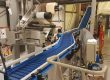
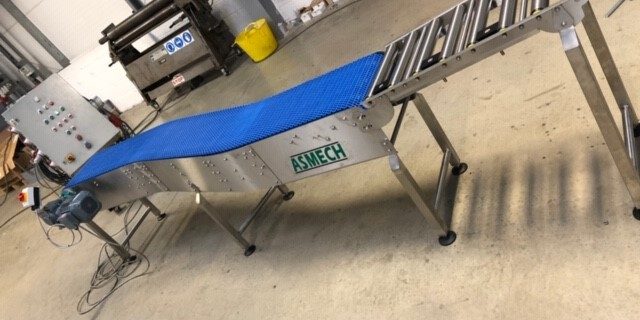
The physical connection between the belt and wear strips generates constant friction. Older, heavy rubber or PVC belts require substantial drive torque just to move their own deadweight. Switching to lightweight, low-friction modular plastic belting reduces friction along the wear bed. Lower friction requires less motor torque, translating directly into lower amperage draw. Over a 50-metre run, this mechanical swap alone results in noticeable kWh savings.
- Implementing Smart “Auto-Sleep” Sensor Loops
An idle belt is a wasted expense. Integrating photoelectric sensors with basic PLC timers creates localised “sleep loops.” If a sensor detects no incoming product for a pre-set window (such as three to five minutes), the system automatically ramps the conveyor drive down to a low-power standby mode or stops it entirely. When an upstream sensor detects an approaching item, the line soft-starts back to operational speed before the product arrives.
Quick Paybacks on Targeted Upgrades
Targeted retrofits – such as adding VFDs to primary drive units, upgrading wear strips, or re-programming sensor logic – carry modest capital outlay and fast payback periods.
Furthermore, reducing electrical load delivers secondary operational gains:
- Lower Thermal Strain: Efficient motors generate less ambient heat, extending component lifespan.
- Reduced Mechanical Wear: Soft starts and reduced idle running reduce wear on gearboxes, drive chains, and sprockets.
Auditing your conveying infrastructure for idle running, friction losses, and outdated drive controls builds immediate resilience into your winter operating budget. At Asmech Systems Ltd, we partner with UK manufacturing and packaging plants to conduct tailored conveyor audits, retrofit energy-saving components, and manufacture custom low-friction systems – ensuring your production lines run leaner, cooler, and more cost-effectively when power demand is at its highest.
Contact us today to discuss your winter energy-saving contingencies.