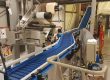


In the early stages of a manufacturing operation, keeping things simple is usually the smartest strategy. A standalone conveyor belt connecting two machines gets the job done without overcomplicating your floor plan or stretching your budget. But as demand grows, orders stack up, and product lines expand – those reliable single conveyors can quietly turn into the primary bottleneck in your factory.
With that, there comes a point in every growing facility’s journey when adding “just one more belt” stops solving operational issues and starts creating new ones. So, how do you know when it’s time to move beyond standalone equipment and invest in a fully integrated, turnkey conveyor system?
Here are four clear signs that your facility is ready to make the change:
-
Your Factory Floor Resembles a Jigsaw Puzzle
Disjointed layouts force your team to spend valuable time manually bridging the gaps between isolated machines.
- Issue: Products are being manually transferred between separate conveyor sections or wheeled across the floor on pallets just to reach the next stage.
- Solution: A turnkey solution engineers your entire production line into a single, continuous, fluid process.
- Custom transfers, accumulation zones, and automated elevators connect every stage seamlessly, eliminating floor congestion and manual handling.
-
Production Bottlenecks Keep Shifting
Fixing a slowdown in one area only to watch another pop up further down the line, points to an uncoordinated system.
- Issue: Standalone conveyors running at fixed, unaligned speeds cause products to bunch up, collide, or back up.
- Solution: Turnkey systems integrate intelligent sensors, smart controls, and variable speed drives that allow conveyors to communicate to one another.
- The system automatically monitors and adjusts material flow in real time, stopping line jams long before they happen.
-
Safety Incidents and Product Damage Are Rising
Forcing single lines to run beyond their designed capacity accelerates physical wear on both your equipment and your workforce.
- Issue: Frequent manual handling at awkward transfer points increases the risk of repetitive strain injuries for your operators.
- Unmanaged accumulation causes products to bump into each other, resulting in scuffed packaging or damaged goods.
- Solution: Integrated turnkey systems feature delicate product handling, automated indexing, and built-in safety guards designed specifically around your items.
-
You’re Ready to Automate, But Lack Time
Juggling multiple machinery suppliers and installation schedules is often the single biggest hurdle to a major line upgrade.
- Issue: Designing, sourcing, installing, and commissioning separate pieces of equipment burns through your internal team’s time and energy.
- Solution: A turnkey approach replaces half a dozen contractors with a single specialist engineering supplier.
- They handle the entire lifecycle end-to-end, from initial design and fabrication through to delivery, installation, and final testing.
Making the Shift with Asmech Systems Ltd
Upgrading to a full turnkey system doesn’t mean replacing everything you own overnight. It’s about stepping back to look at the bigger picture and engineering a solution that scales alongside your long-term ambitions.
Based in the Midlands, Asmech Systems Ltd have spent decades designing, manufacturing, and installing bespoke conveyor systems for manufacturers across the food, pharmaceutical, and automotive sectors. Whether you need to integrate new robotics, automate product orientation, or connect every stage of your process under a single smart control panel, we build systems designed to fit your exact footprint.
Don’t let your standalone conveyors hold back your growth, contact us today and start designing for the future.