
In high-throughput manufacturing, a single line stoppage rarely stays isolated. When a downstream packaging machine, labeller, or palletiser pauses – even for a routine ribbon change, tape jam, or sensor reset – the upstream line faces an immediate issue: stop production entirely or risk a costly back-up of products.
During the fourth quarter of the year, when UK factories across the food, beverage and consumer goods sectors run at maximum capacity, these micro-stoppages severely impact output. The key to maintaining line fluidity lies in accumulation engineering – creating smart, mechanical buffer zones that absorb disruptions without halting upstream flow.
The Cost of Micro-Stoppages in Q4
For operations managers, the challenge during peak Q4 isn’t simply achieving top speed; it is maintaining consistent line balance. Constant stop-start cycles create several hidden operational costs:
- Mechanical Wear: Repeatedly stopping and starting heavy conveyor drives puts excessive strain on motors, gearboxes, and belting components.
- Product Damage: Abrupt line halts cause back-pressure, leading to scuffed labels, crushed cartons, or broken glass containers on high-speed bottling lines.
- Lost Overall Equipment Effectiveness (OEE): A two-minute delay on a packaging line backs up, delaying upstream fillers or processing machinery, affecting total line efficiency.
Implementing dedicated accumulation zones decouples critical machine stations, allowing upstream equipment to keep feeding the line while downstream issues are resolved.
Core Accumulation Technologies for Peak Throughput
Selecting the right buffering method depends on product configuration, line speed, and available floor space. Three primary accumulation technologies are perfect for integration into UK manufacturing layouts:
Zero-Line-Pressure (ZLP) Accumulation
On traditional roller or belt conveyors, accumulated items push against one another, creating line pressure that can damage delicate packaging. ZLP systems divide the conveyor into independently controlled zones equipped with sensors. As a product moves into a zone, the drive disengages if the downstream section is occupied. Products accumulate close together without physically touching, making ZLP ideal for fragile goods, boxed items, and multi-SKU lines.
Rotary Accumulation Tables
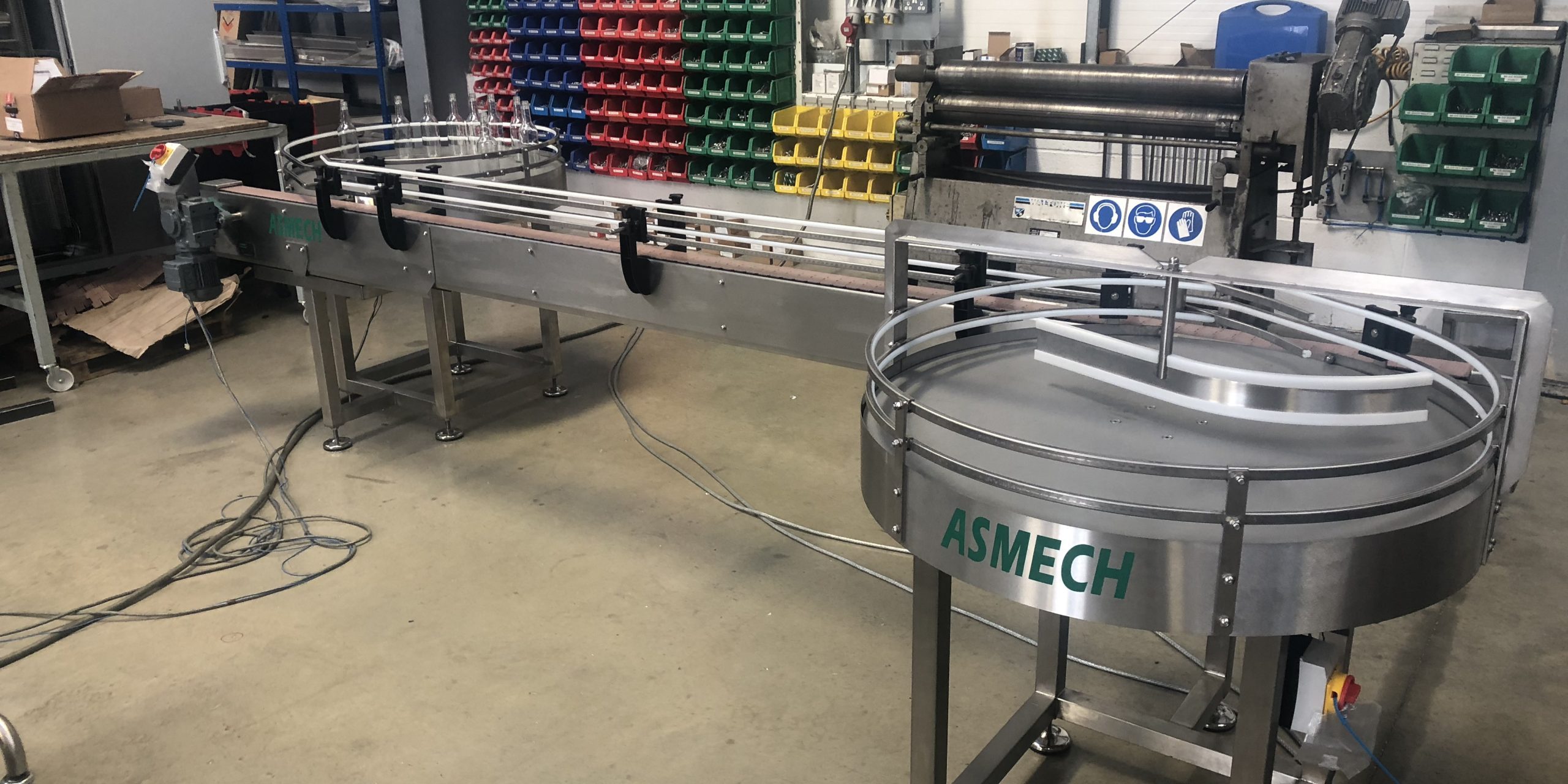
For circular or rigid containers – such as glass bottles, aluminium cans, or plastic jars – rotary tables provide an efficient, compact accumulation solution. Engineered directly into new or existing lines, a stainless steel rotary table temporarily absorbs excess product when the downstream line slows. Once the blockage clears, the rotating disc smoothly feeds items back onto the main conveyor track in single file.
Bi-Directional and In-Line Buffering
For space-constrained facilities, long linear buffer runs aren’t always feasible. Bi-directional accumulation tables sit adjacent to the main conveyor line. When downstream machinery stops, the line automatically diverts products onto the table; when the line clears, the table reverses direction to seamlessly rejoin the main flow.
Designing Buffers for Your Facility
Effective accumulation strategy requires precise timing and load calculations rather than simply placing extra rollers on the floor. Key engineering factors to evaluate include:
- Buffer Capacity: Calculating the exact surge capacity needed (in seconds) based on average micro-stoppage duration.
- Line Speed Matching: Ensuring the recovery speed of the downstream line is fast enough to clear accumulated stock before the next surge.
- Container Characteristics: Matching belt friction levels and guide rails to specific materials, whether glass, PET, or corrugated board.
Targeted accumulation buffering ensures small operational glitches do not become major production losses. As bespoke material handling specialists, Asmech Systems Ltd works alongside UK manufacturers to design, manufacture, and install turnkey accumulation solutions that safeguard product quality, protect critical machinery, and deliver maximum throughput during the peak Q4 demand.
Contact us today to discuss how you can add an accumulation strategy into your layout in preparation for the busy festive season.